

You are using an out of date browser. It may not display this or other websites correctly.
You should upgrade or use an alternative browser.
You should upgrade or use an alternative browser.
PIADM LCFC V BCFC
- Thread starter Pembroke
- Start date
Donate to RefChat
Help keep RefChat running, any donation would be appreciated


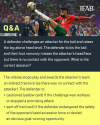
Playing in a dangerous manner is any action that, while trying to play the ball, threatens injury to someone (including the player themself) and includes preventing a nearby opponent from playing the ball for fear of injury.
I know the part in bold is 'included' not dependent on, but clearly that doesn't happen. The defender plays the ball as he would if the attacker didn't challenge, and didn't appeal for anything at all.
I don't think you'd be wrong to penalise it, but I think expectation is a big thing in these scenarios too, and it doesn't seem there is much expectation here. Perhaps because the defender has brought his head relatively low to head the ball.
I know the part in bold is 'included' not dependent on, but clearly that doesn't happen. The defender plays the ball as he would if the attacker didn't challenge, and didn't appeal for anything at all.
I don't think you'd be wrong to penalise it, but I think expectation is a big thing in these scenarios too, and it doesn't seem there is much expectation here. Perhaps because the defender has brought his head relatively low to head the ball.
Playing in a dangerous manner is any action that, while trying to play the ball, threatens injury to someone (including the player themself) and includes preventing a nearby opponent from playing the ball for fear of injury.
I know the part in bold is 'included' not dependent on, but clearly that doesn't happen. The defender plays the ball as he would if the attacker didn't challenge, and didn't appeal for anything at all.
I don't think you'd be wrong to penalise it, but I think expectation is a big thing in these scenarios too, and it doesn't seem there is much expectation here. Perhaps because the defender has brought his head relatively low to head the ball.
If a player swings his foot very close to an opponents head who is attempting to head the ball wouldn't this be considered dangerous? Do the pro level technical and physical abilities have any bearing? How does stooping to a ball that is closer to the players head v feet effect the decision where the Leicester player is attempting a scissors kick (?) above their head?
My expectation is that this is dangerous play, its very dangerous, so should be penalised.

one
RefChat Addict
There are several offences (or phrases) in law in which the LOTG definitions is not the same as the English definition. The most obvious one is "gaining an advantage" when in an offside position.
PIADM is another one. Just because an act can be interpreted as playing in a dangerous manner under the English definition, it doesnt mean it qualifies as an offence. Under LOTG definition several conditions must be met before it qualifies as an offence. Just like several conditions must be met before gaining and advantage can qualify as an offence.
PIADM is another one. Just because an act can be interpreted as playing in a dangerous manner under the English definition, it doesnt mean it qualifies as an offence. Under LOTG definition several conditions must be met before it qualifies as an offence. Just like several conditions must be met before gaining and advantage can qualify as an offence.
There are several offences (or phrases) in law in which the LOTG definitions is not the same as the English definition. The most obvious one is "gaining an advantage" when in an offside position.
PIADM is another one. Just because an act can be interpreted as playing in a dangerous manner under the English definition, it doesnt mean it qualifies as an offence. Under LOTG definition several conditions must be met before it qualifies as an offence. Just like several conditions must be met before gaining and advantage can qualify as an offence.
So how would a player attempting an overhead/scissors kick and narrowly missing a players head/face by centimetres not be dangerous play?

Last edited:
one
RefChat Addict
I have mentioned several times here that there are many IFAB Q and Qs that are misleading (and some plainly wrong). I think the aim of that Q and A is to identify that it can't be a DFK.
1. action to play the ball - check
2. threatens injury to someone (including the player themself) - likely check
3. Opponents nearby - check
4. prevents nearby opponent from playing the ball for fear of injury - unknown
Did your example satisfy the the 4th criteria?
I give you another example. A player attempts to header the ball behind him at a low hight with a backflip. There are no opponents around. The header action is very dangerous to himself and ends up badly injuring himself. Is this dangerous play and if so would you award an IFK?
Your example may well be dangerous play. However it may or may not be an offence. For it to be a PIDAM offense it has toSo how would a player attempting an overhead/scissors kick and narrowly missing a players head/face by centimetres not be dangerous play?
1. action to play the ball - check
2. threatens injury to someone (including the player themself) - likely check
3. Opponents nearby - check
4. prevents nearby opponent from playing the ball for fear of injury - unknown
Did your example satisfy the the 4th criteria?
I give you another example. A player attempts to header the ball behind him at a low hight with a backflip. There are no opponents around. The header action is very dangerous to himself and ends up badly injuring himself. Is this dangerous play and if so would you award an IFK?
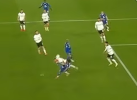
I think watching the clip the Leicester players foot does marginally go past the Bristol City players head as it passes centimetres from his face narrowly missing it!! In the IFAB example the players foot is further away from the players face/head than the Leicester players.With respect, the IFAB Q&A posted is irrelevant anyway as the foot is clearly not above head level in the Bristol City game
So attempting a overhead/scissors kick with a players head centimetres away threatening to injure the player is not dangerous play if the player still plays the ball, or attempts to play the ball?I have mentioned several times here that there are many IFAB Q and Qs that are misleading (and some plainly wrong). I think the aim of that Q and A is to identify that it can't be a DFK.
Your example may well be dangerous play. However it may or may not be an offence. For it to be a PIDAM offense it has to
1. action to play the ball - check
2. threatens injury to someone (including the player themself) - likely check
3. Opponents nearby - check
4. prevents nearby opponent from playing the ball for fear of injury - unknown
Did your example satisfy the the 4th criteria?
I give you another example. A player attempts to header the ball behind him at a low hight with a backflip. There are no opponents around. The header action is very dangerous to himself and ends up badly injuring himself. Is this dangerous play and if so would you award an IFK?
You don't think this was dangerous?

Going past/above his head, and going above head height are different things. The players head is lower than what you would normally consider to be head height.I think watching the clip the Leicester players foot does marginally go past the Bristol City players head as it passes centimetres from his face narrowly missing it!! In the IFAB example the players foot is further away from the players face/head than the Leicester players.
So attempting a overhead/scissors kick with a players head centimetres away threatening to injure the player is not dangerous play if the player still plays the ball, or attempts to play the ball?
You don't think this was dangerous?
View attachment 8592
What I would say is that the defender didn't pull out of the challenge, and he didn't get struck in the head, so arguably he wasn't actually in danger at all.
Regardless, nobody is saying it's not PIADM. The argument is that it's not clearly a case of missed PIADM.
Going past/above his head, and going above head height are different things. The players head is lower than what you would normally consider to be head height.
What I would say is that the defender didn't pull out of the challenge, and he didn't get struck in the head, so arguably he wasn't actually in danger at all.
Regardless, nobody is saying it's not PIADM. The argument is that it's not clearly a case of missed PIADM.
Stay with me here. I am even more confused.
The ball was at a height where you would normally expect a player to head it.
So a scissors kick with a boot going centimetres past a players face is not dangerous if the player does not pull out of the challenge?

I think you're making a rather large mountain out of a molehill. PIADM is a bit of a minefield. It didn't affect the game in any way shape or form, because the defender was able to play the ball as he normally would. Could it have been given as PIADM... absolutely. Has the referee missing it cost you a goal? No... your defending did that. I like Bristol City...but I've a feeling if this decision wasn't at the cost of your club, you wouldn't be giving it a second thought.
I think you're making a rather large mountain out of a molehill. PIADM is a bit of a minefield. It didn't affect the game in any way shape or form, because the defender was able to play the ball as he normally would. Could it have been given as PIADM... absolutely. Has the referee missing it cost you a goal? No... your defending did that. I like Bristol City...but I've a feeling if this decision wasn't at the cost of your club, you wouldn't be giving it a second thought.
As a half decent ex player but humble ref I am attempting to understand this decision. I sincerely do not understand how a player attempting a bicycle kick, or scissors, or bicey as the kids call it where a boot flies past centimetres past a player face is not dangerous. The result, score, I don't care .. I simply do not get this one, hence my inquiry.
I as a player had reconstructive surgery on my nose due to being kicked in the face heading a ball .. Players will put their heads in positions where they do not pull out. I at my modest playing level would have attempted to head that ball, which was at a height where heading it would be a logical choice, the attackers decision I consider to be dangerous. I as a dumb beast defender never shirked challenges, and in the critical defending area you do not shirk heading crosses danger, or not.
It was not Rooney v Man City there was no danger. There is a boot flying past a face here. The skill, the scissors even has its own part of the law. Because its a skill with an obvious amount of danger attached to it if performed where the heads are, and this was.
PIADM is a bit of minefield .. Clearly.
The one bit of advice I would give you in a refereeing sense regarding it, is if you're calling this for PIADM here, make sure you get on that whistle very quickly, because once that player gets the ball and scores, if you then disallow it, you're gonna have carnage on your hands.
Feels like this is one that could have gone either way, it wasn't really at head height, yes the foot was near his head but only because he was ducking down. I don't think there could be many complaints if it had been given, but equally I don't there there is any error in not giving it. I'm erring towards it not being an offence purely by the complete lack of reaction or protest by the defender, if a player genuinely feels someone has put him at risk and / or prevented him from playing the ball he will 100% be saying something about it. If the referee disallowed the goal here he would have been surprising both sets of players and that rarely ends well, unless, as @RefereeX said he was extremely quick on the whistle and managed to stop play before the chance happened.
The 4th criteria isn’t required.I have mentioned several times here that there are many IFAB Q and Qs that are misleading (and some plainly wrong). I think the aim of that Q and A is to identify that it can't be a DFK.
Your example may well be dangerous play. However it may or may not be an offence. For it to be a PIDAM offense it has to
1. action to play the ball - check
2. threatens injury to someone (including the player themself) - likely check
3. Opponents nearby - check
4. prevents nearby opponent from playing the ball for fear of injury - unknown
Did your example satisfy the the 4th criteria?
I give you another example. A player attempts to header the ball behind him at a low hight with a backflip. There are no opponents around. The header action is very dangerous to himself and ends up badly injuring himself. Is this dangerous play and if so would you award an IFK?
This Q&A is wrong btw. If the defender is cautioned for a reckless challenge or sent-off for using excessive force, the restart is a direct free kick.So how would a player attempting an overhead/scissors kick and narrowly missing a players head/face by centimetres not be dangerous play?
View attachment 8590
View attachment 8589
one
RefChat Addict
Because IFAB says so in a in a social media post that a criteria stated in Laws of the game is not required?The 4th criteria isn’t required.
Are you saying somthing that IFAB said in a social media post is wrong because it contradicts law?This Q&A is wrong btw. If the defender is cautioned for a reckless challenge or sent-off for using excessive force, the restart is a direct free kick.

Last edited:
one
RefChat Addict
@Pembroke you have this asked several times. But you have not answered the question in the example in my post.You don't think this was dangerous?
A player attempts to header the ball behind him at a low hight with a backflip. There are no opponents around. The header action is very dangerous to himself and ends up badly injuring himself. Is this dangerous play and if so would you award an IFK?
socal lurker
RefChat Addict
The 4th criteria has been a question mark for some time. It used to be clearly part of what was expected to have PIADM. The current language makes it unclear. It if doesn’t impact the opponent, there is a good argument it is trifling—at least at the professional level. The lower the skill level the more likely PIADM is to be called—and rightly so as the less body control players have the more dangerous the same play is.The 4th criteria isn’t required.
This Q&A is wrong btw. If the defender is cautioned for a reckless challenge or sent-off for using excessive force, the restart is a direct free kick.
As far as DFK vs IFK, IFAB muddled things dramatically when it added “challenges” to “tackles” as an offense. Even if it does it rise to the level of “reckless,” a careless challenge is a DFK. That leaves a big blur of where the line is between many PIADM calls and careless challenge calls.
I didn't answer it as I didn't think it was relevant and law includes "threatens injury to someone including the player themselves.@Pembroke you have this asked several times. But you have not answered the question in the example in my post.
There’s two definitions of includes in English; “for example” and “has as one of its features”. In isolation, both work here. IFAB has clarified they mean “for example”. Therefore, we apply the Law that way. The only case when we should reject IFAB rulings is when there is no interpretation where they are correct e.g. restarting with an IDFK after a reckless challenge.Because IFAB says so in a in a social media post that a criteria stated in Laws of the game is not required?
As a side note, I’m not brave enough to try and draw a line between PIADM and